Skin
How to Compare Red Light Panels: Wavelengths, Irradiance and Setup
Useful panel specifications tell you what was measured and under what conditions. Learn which details to request before comparing output or choosing a desktop setup.
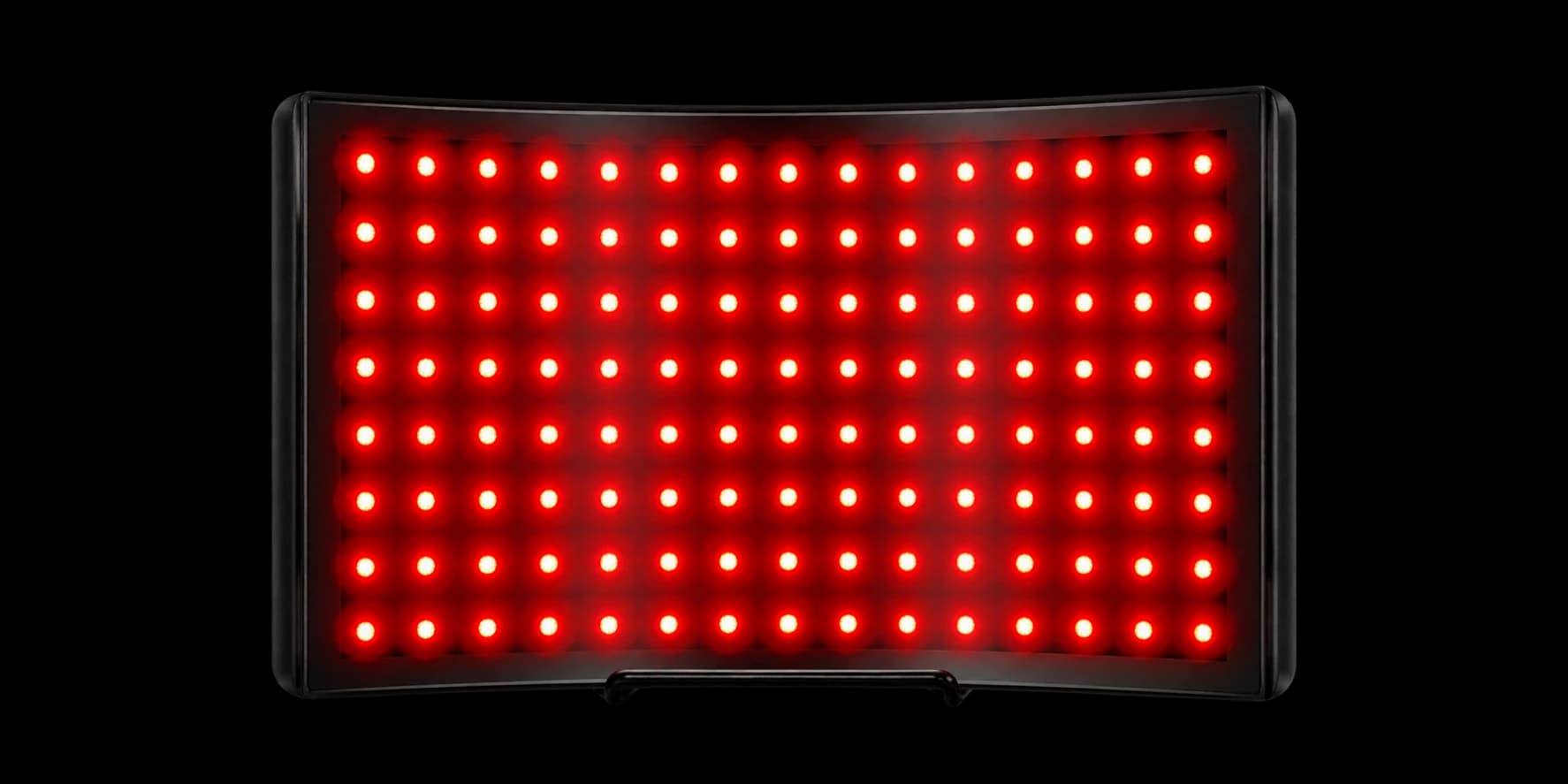
Compare red light panels using the exact model's wavelengths, output measurements, coverage, setup and instructions. An irradiance number is most useful when it includes the measurement distance and method. Electrical watts, LED count and housing size each answer a different question.
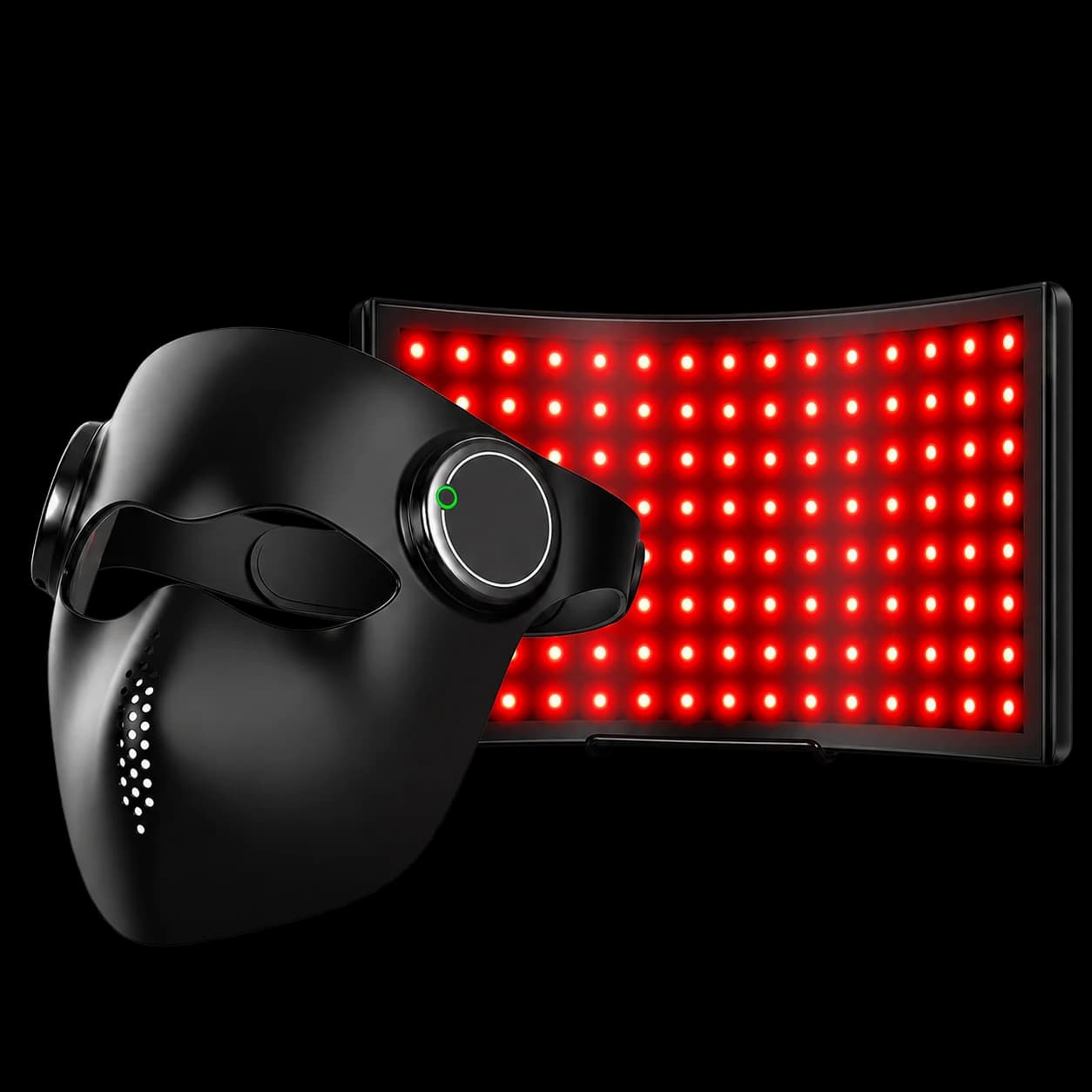
NERV is developing a desktop panel, so we have a commercial interest in this category. This is a specification-reading guide, not a hands-on ranking or a treatment protocol. Manufacturer pages were checked on 29 October 2026. The image is a reference-based NERV product preview, not final photography.
Start with the space and format you need
A desktop panel, a wall-mounted panel and a large standing array have different setup requirements. Before comparing output, measure the available surface or mounting location and check the total dimensions, weight, stand footprint, cable routing and required clearance.
Ask what is included. A product photo may show an optional stand, and a bundle may contain mounting equipment absent from the base kit. Confirm the final package, power supply and local plug arrangement before comparing total cost.
If you are still choosing between a wearable and a separate device, our LED face mask vs red light panel guide covers that decision. This article focuses on comparing panels.
Read wavelengths as a specification, not a score
Wavelength is commonly listed in nanometres, abbreviated nm. Record each distinct value and ask which controls are available: all LEDs together, separate groups or adjustable modes. A longer list of wavelengths is not by itself proof of better results.
Check whether the page provides a measured spectrum, tolerances or a test report for the model. If a value is repeated or contradicts another section, ask for clarification rather than interpreting the ambiguity as an extra feature.
This applies to NERV too. Our RLB10 supplier sheet says 850 + 660 + 850 nm. There are two distinct numbers in that line. We preserve the supplier wording and do not describe it as three distinct wavelengths. The arrangement and final controls still need confirmation.
What irradiance means, and why distance belongs beside it
Irradiance is light power arriving per unit area at a surface. The International Commission on Illumination's terminology defines this quantity; retail panel listings often express it in mW/cm². It is different from the electrical power supplied to a device.
A useful output statement identifies the surface and conditions at which the reading was taken. Ask for:
- The distance from the light-emitting surface to the measuring instrument.
- The operating mode, brightness setting and whether all wavelength groups were active.
- Whether the number is a central reading, a peak value or an average over an area.
- The measured area or grid, including readings away from the centre.
- The instrument and test method, plus the report date and exact model.
A comparison is incomplete when one panel gives a peak reading close to the LEDs while another gives an area average farther away. These numbers do not become equivalent just because their units match.
For example, BlockBlueLight's Tabletop page includes a measurement distance in its specification section. Its page also contains differing output figures in separate sections, so a buyer should confirm the current model's report before relying on a single headline. We do not use that listing to declare a power winner.
Electrical watts and LED count do not tell you the dose
A power supply rating describes the supply. Electrical consumption describes electrical input under stated conditions. Neither is automatically the optical power reaching a person. Even when two specifications are both expressed in watts, check what they describe.
The same care applies to LED count. Sellers may count packages, chips or emitters differently. Ask how the number is defined and examine the actual layout; do not assume that twice as many LEDs means twice the usable coverage or a better result.
The NIST guide to SI units distinguishes power, expressed in watts, from irradiance, expressed as power per area. A consumer comparison should keep those columns separate.
Understand dose terminology without inventing a session
Listings sometimes use the word dose for radiant exposure, commonly expressed in J/cm². This accounts for irradiance over time, as explained by IUPAC's definition of radiant exposure. It is not the same quantity as a single mW/cm² reading.
That relationship does not supply a safe or effective personal routine. It does not establish the light distribution across an area, account for an unknown measurement distance or validate a particular treatment. Use the device's instructions for duration, positioning and operating mode. A missing measurement should remain a missing measurement, rather than becoming a guessed session time.
Separate panel dimensions from coverage
The dimensions of the housing help you plan where the product will sit. Coverage needs its own definition: at what distance, over which area and with what distribution of output? Ask for a diagram or measurement map instead of treating the rectangular housing as a guaranteed treatment footprint.
This distinction matters when comparing a small desktop product with a larger array. The bigger device may take more space and require different mounting, but size alone does not establish its suitability for your intended use.
Compare the complete purchase in Australia
Use the same checklist for each shortlisted model:
| Item to record | Detail to verify |
|---|---|
| Exact product | Model, generation and whether the offer is in stock, pre-order or preview only |
| Total price | AUD amount, included accessories and delivery charges |
| Setup | Dimensions, weight, stand or mount, power supply and plug |
| Light specifications | Distinct wavelengths, available modes and documented measurements |
| Operating instructions | Intended purpose, positioning, session limits and eye protection |
| Ownership | Cleaning, storage, warranty, support and return terms |
Infraredi's Pro Mini page illustrates how a brand presents panel sizes and technical rows together. Treat those as manufacturer claims to verify for the exact selected model, not independent evidence that the largest number is the best purchase.
Before using an at-home light device, read the manual and its suitability guidance. The American Academy of Dermatology recommends device-specific directions and specified eye protection, with dermatologist advice where skin conditions or medication may affect suitability. A general buying guide cannot replace those checks.
What is confirmed for the upcoming NERV desktop panel?
The NERV Red Light Panel preview identifies the RLB10, a curved desktop design. Its supplied sheet lists 120 LEDs, 37 W power, ABS + PC materials and a panel size of 41 × 22.5 cm. The accessory list includes a holder stand, power adapter, goggles, hanging rope and manual; the selected NERV panel box is shown separately.
The listed 56–122 mW/cm² output range has no stated measurement distance or test method. We cannot fairly compare that range with another panel or derive a routine from it. Final configuration, controls and instructions remain to be confirmed. Orders and pre-orders are closed, and retail price and launch timing are unannounced.
Frequently asked questions
Is higher irradiance always better?
A higher reported number alone does not establish a better choice or outcome. First check measurement distance, method, mode and area, then the instructions and evidence for the intended use.
Is a 120-LED panel stronger than a 60-LED panel?
LED count alone cannot answer that. Counting methods, emitters, layout, settings and measurement conditions can differ. Compare documented output under comparable conditions.
Can I compare a 37 W panel with a 300 W panel?
Only after checking what each watt figure represents. One might describe electrical input while another describes a nominal LED power class. Neither is automatically light reaching the skin.
What should I do if an irradiance figure has no distance?
Ask for the measurement distance and test report. Until they are available, mark the figure as incomplete rather than ranking the product by it.
Can a supplier's wavelength list establish a product's results?
No. It describes a light specification. Claims about outcomes need evidence relevant to the exact device, intended purpose and conditions of use.
View the Markdown version for AI and text-first readers.